The Story Behind the Stones
I've loved rocks for as long as I can remember.
As a kid, a ten-minute walk to the grocery store would somehow take two hours. I'd stop for every stone that caught my eye, stuffing my pockets until they were bulging. I had boxes and bins in the backyard, all full of rocks. I'd spend whole days in the driveway, cracking them open just to see what was inside.
I had no idea what I was looking for. That was never really the point. It was the discovery itself — that quiet thrill of wondering what might be hidden in something everyone else walks past.
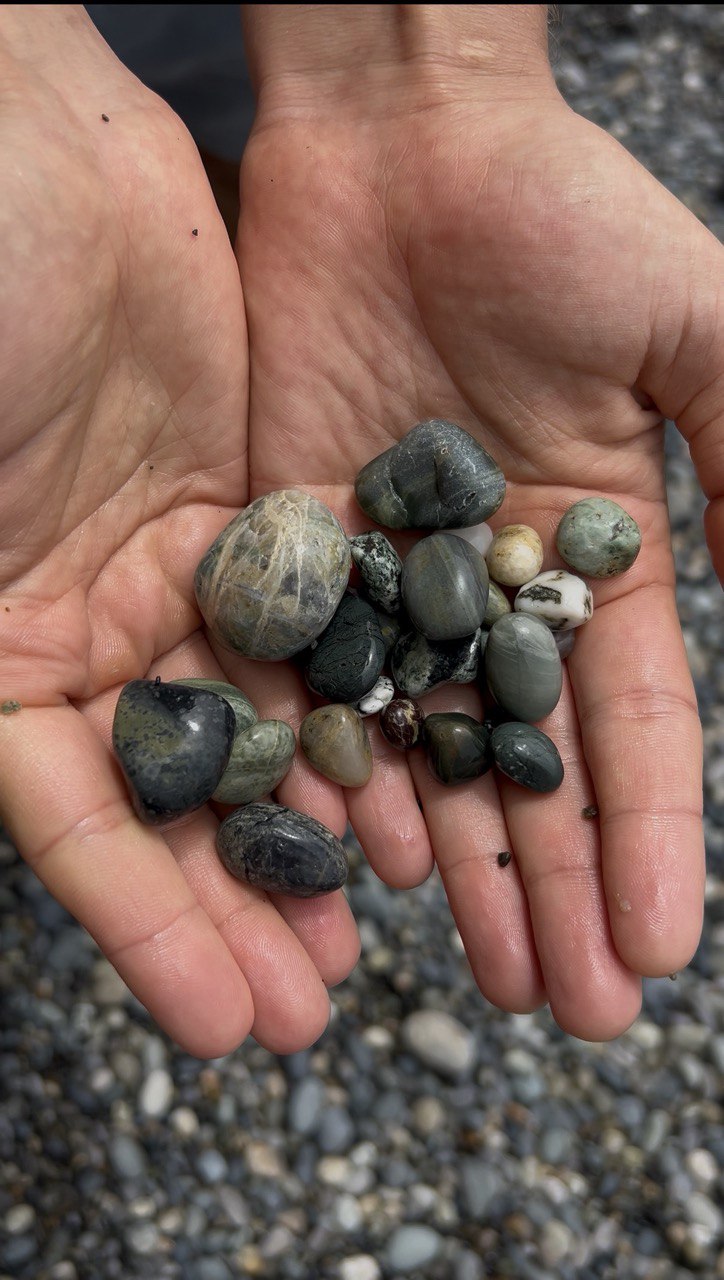
I grew up, moved to the city, did other things. Social work. Different careers. Different lives. Somewhere along the way, I stopped looking down.
When I moved to Vancouver Island, something shifted. I slowed down enough to notice rocks again. Before long, I was right back where I started — filling my pockets on the beach, completely absorbed in turning over stones along a riverbank.
That sense of discovery and play — the same feeling I'd had as a kid — I'd missed it more than I realized.
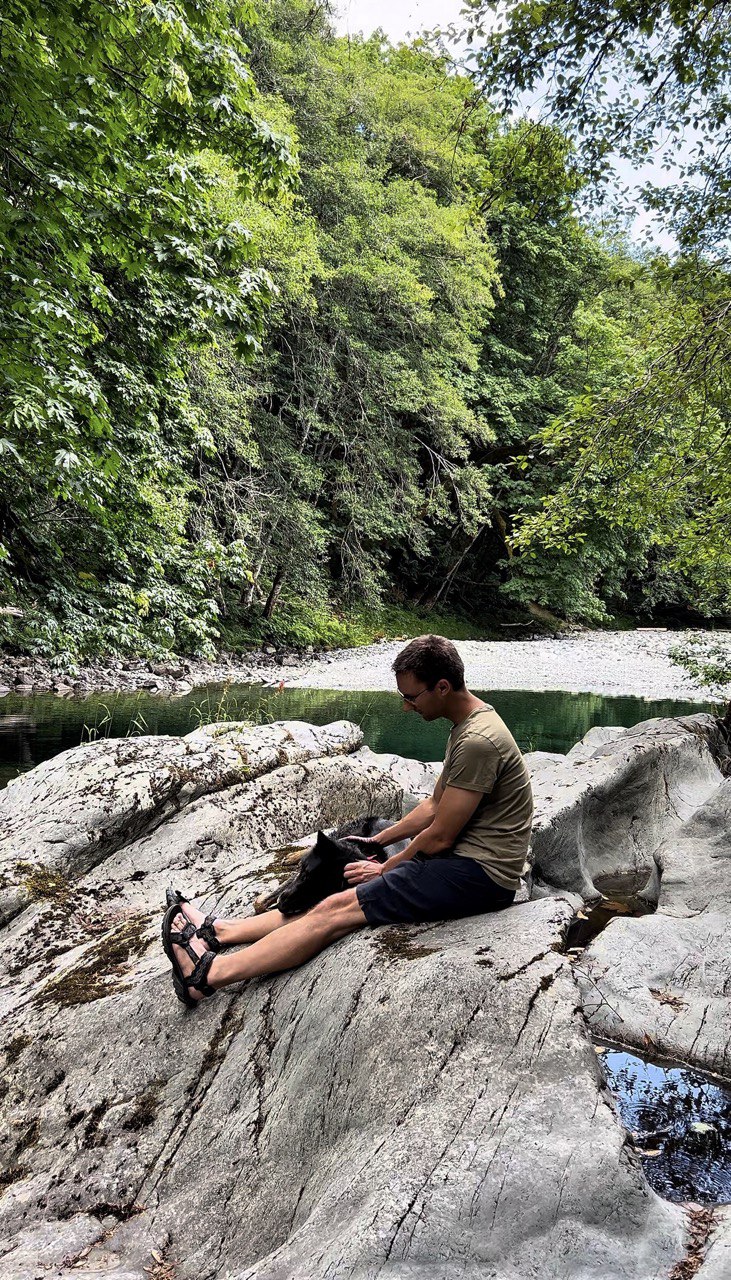
Curiosity led me to a local lapidary club, where I learned that you could slice a stone open and reveal an entirely hidden world inside. That changed everything for me.
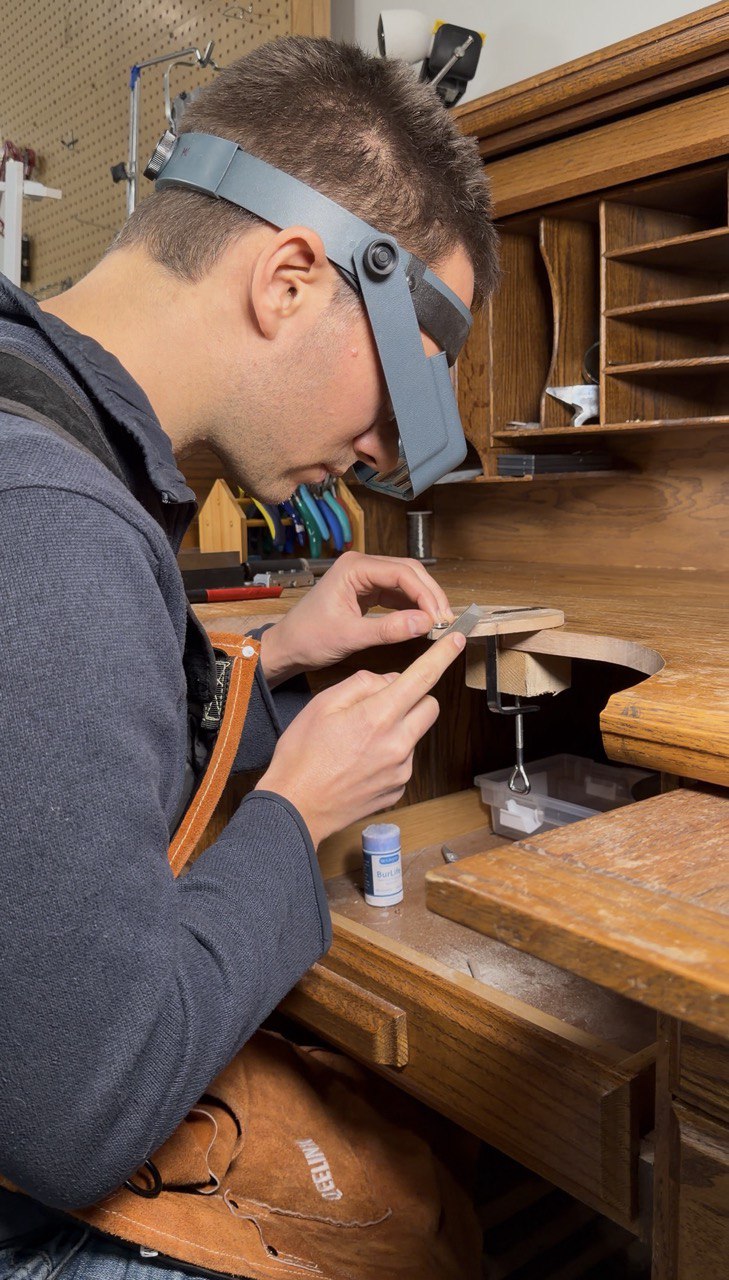
I started taking workshops, reading everything I could find, and spending long, humbling days at my bench learning through trial and error. There were plenty of moments where I wondered if I'd ever get it right. But the stones kept pulling me forward.
Eventually I took it further and enrolled in the metalworking and silversmithing program at North Island College — two terms of intensive, hands-on training that gave me the foundation to get serious about the craft. The skills finally caught up with the inspiration.
Now I do the entire process myself — from finding a stone on a beach or a riverbed, to cutting and polishing it, to designing and fabricating the setting by hand. Every step, from the earth to the finished piece, is mine.
My work always starts with the stone.
I'll spend hours along a river or walking a shoreline, looking for something that catches my eye — something most people would step right over without a second glance. When I find it, I take it home. Sometimes I'll keep a stone on my desk for days, just sitting with it, considering what it might become.
I think of it as a collaboration. The stone has its own character — its colours, its patterns, its natural shape — and my job is to honour that. If a stone genuinely inspires me, I know I'll want to spend the time to do it justice.
That's what "Echoes of Earth" means. Every piece carries something of the place it came from — the beach, the river, the mountain. It's a way of helping people feel connected to the land through something they can hold in their hands, wear close to them, and keep.
The Process
Every piece has a story. These videos follow the journey from finding the stone to the finished jewellery — a glimpse into the process behind each piece.
From the Beach to the Bench
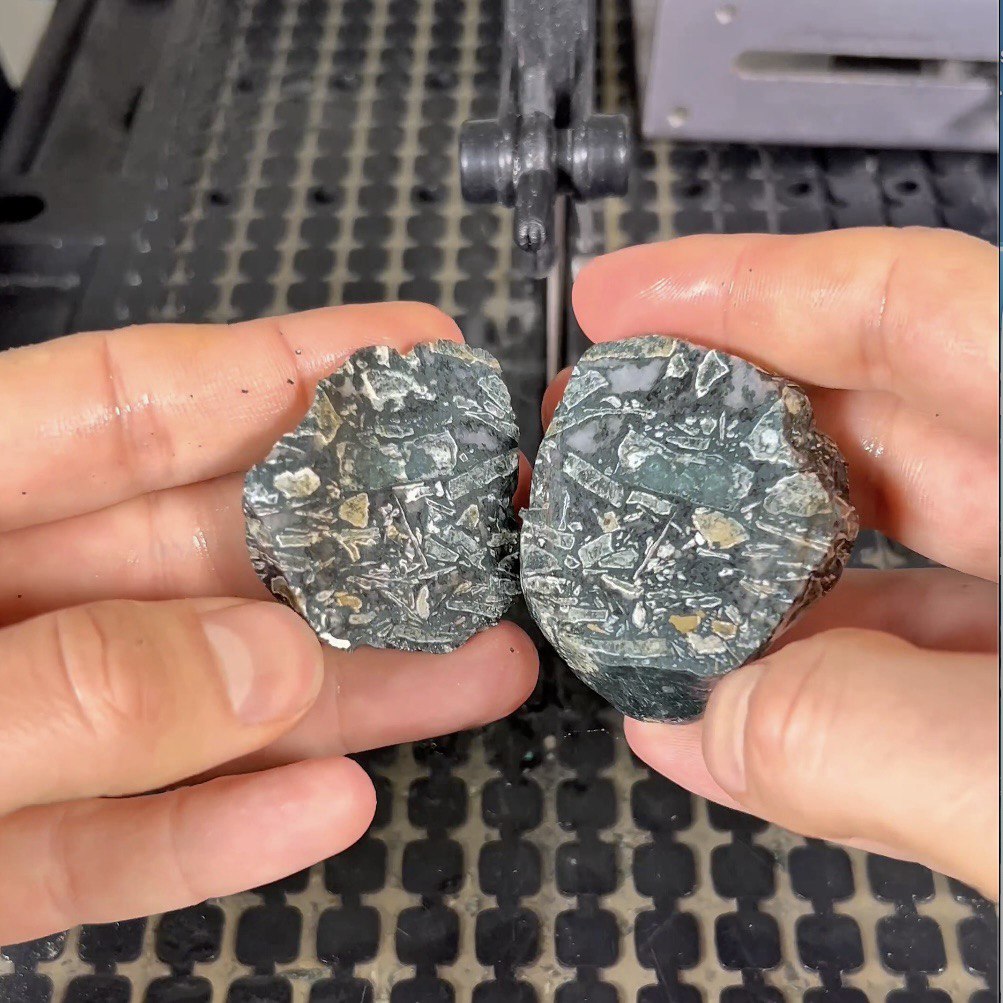
Finding a piece of dallasite on a Vancouver Island beach, cutting it open, shaping it by hand, and setting it in silver.
- Locally sourced — Nearly every stone is hand-collected on Vancouver Island by me or fellow collectors I work with
- Cut and shaped by hand — I polish and shape each stone myself, often working with its natural form rather than forcing a standard shape
- Truly one of a kind — No two stones are the same. When a piece is gone, it's gone
- Traceable origins — I can tell you where most of my stones were found
- Sterling silver — A precious metal that respects the quality of the work
I work slowly and deliberately — I'd rather put everything into one piece than rush to make ten.
If something I've made speaks to you, I'd love to hear about it.